A coveted shoreline
Ancient settlements, regional trade, and the port of Khadzhibey connect this coast to a much older Black Sea story.
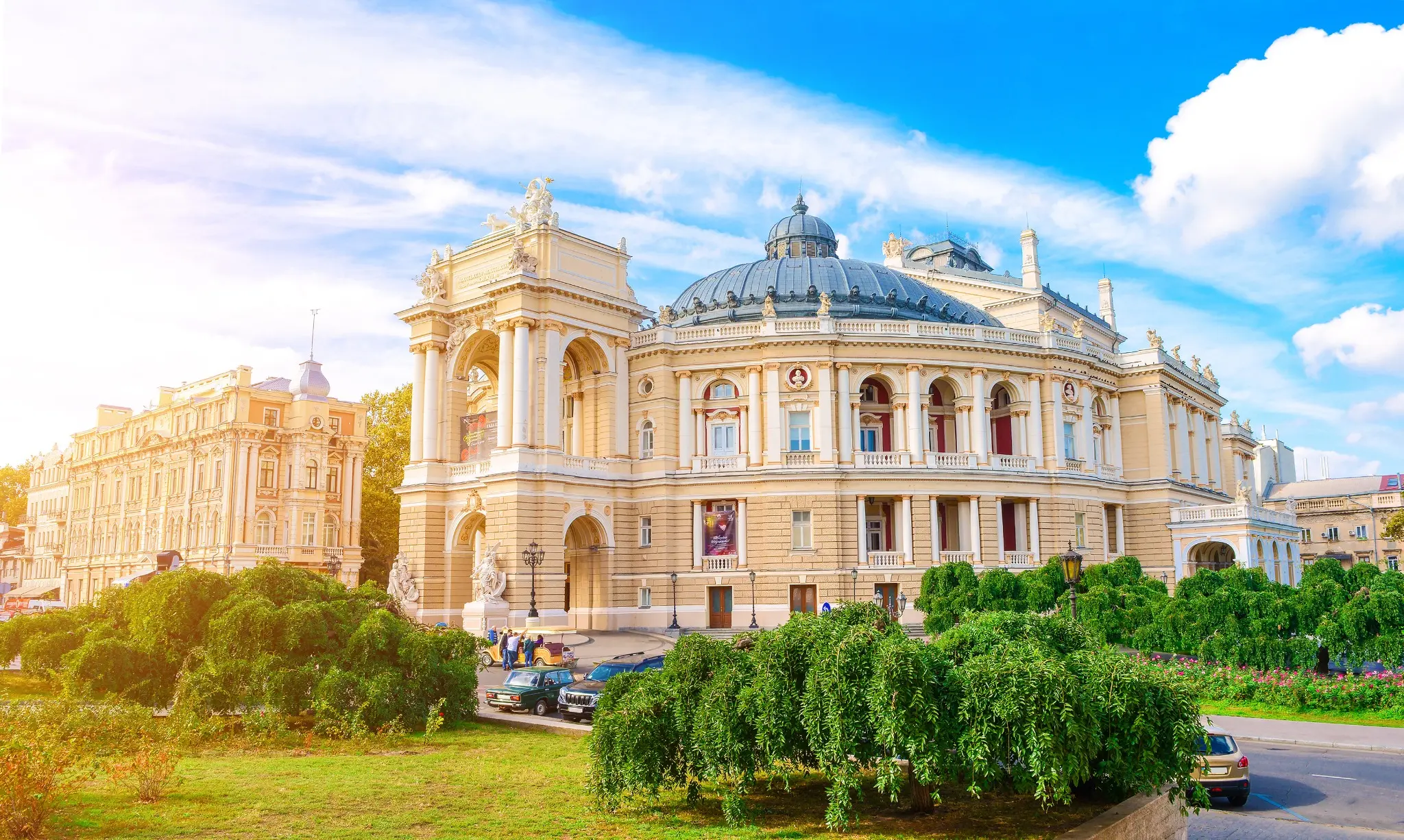
The city behind our name
One Black Sea city shaped our family. One Michigan city gave us a second home. Odesa by Chef Sergey is where those stories meet.
Odesa, Ukraine · On the Black Sea
Not a theme. A place we carry.
For six generations, our family was born, raised, and rooted in Odesa. Our grandparents walked its boulevards. Our parents built their lives there. We learned hospitality, celebration, and the meaning of a generous table in that city.
When war forced us to leave Ukraine, we did not stop belonging to Odesa. We carried its recipes, humor, music, and memories with us. Midland welcomed our family and became our second home. Naming this restaurant Odesa is our way of honoring both: the city that formed us and the community that gave us room to begin again.
“Odesa is the home we miss. Midland is the home that welcomed us.”Read our family story
One city · two familiar spellings
Odesa and Odessa point to the same beloved Black Sea city. For generations, most English speakers knew the Russian-derived spelling Odessa, with two s's. It remains familiar, understandable, and deeply present in books, family records, businesses, and memories around the world.
Odesa, with one “s,” is the official transliteration of the Ukrainian name Одеса. Ukraine standardized its modern Latin-letter transliteration in 2010, and the United Nations endorsed that system in 2012. After Russia's full-scale invasion in 2022, many international institutions, media organizations, and individuals adopted Odesa more widely as a way of using the city's Ukrainian name rather than a Russian-derived form.
So the one-s spelling did not suddenly appear in 2022, and people using the historic two-s spelling are not speaking of a different place. We chose Odesa because it is the city's official Ukrainian name—and because our restaurant carries our Ukrainian home forward.
A city built facing outward
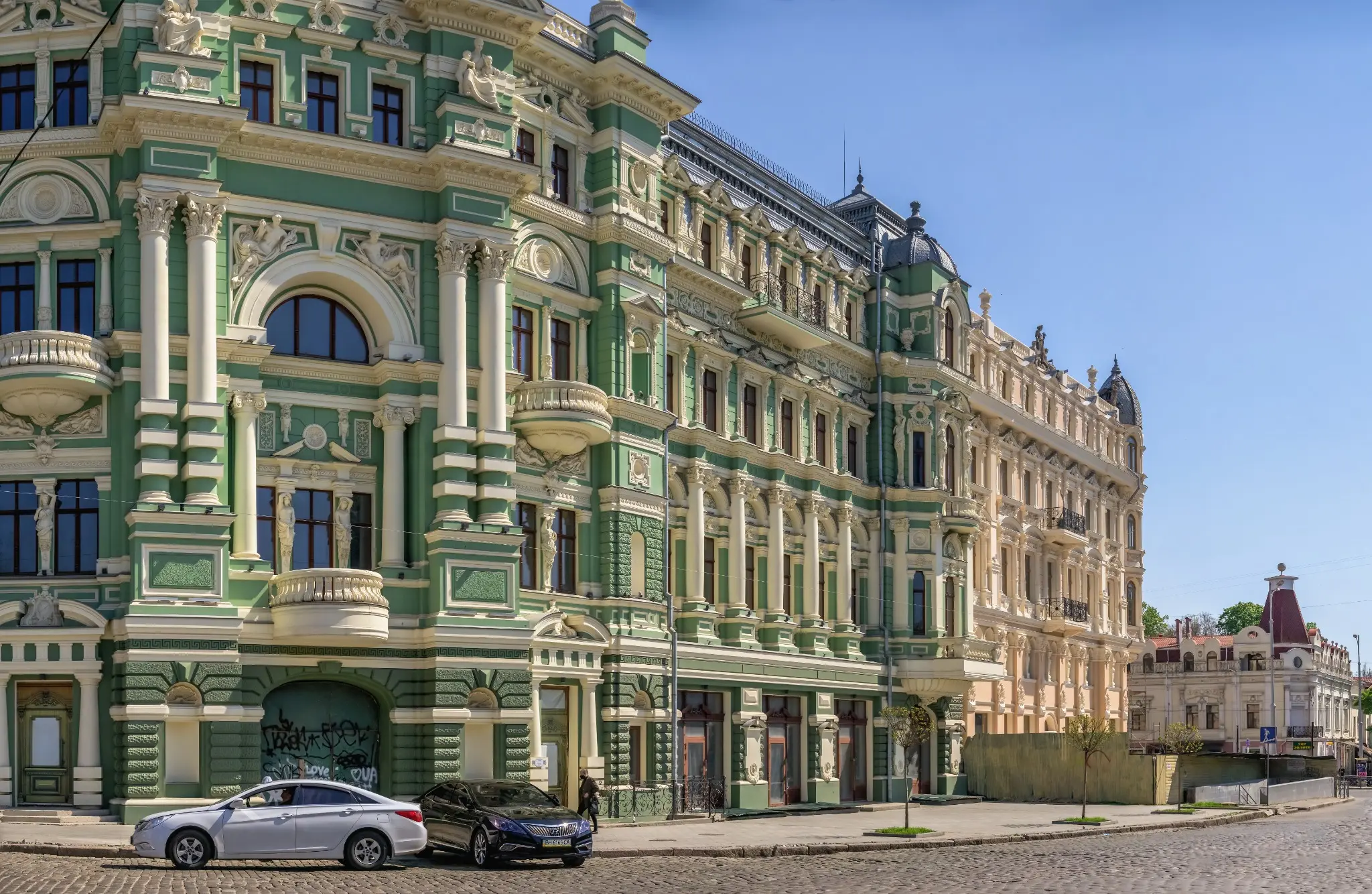
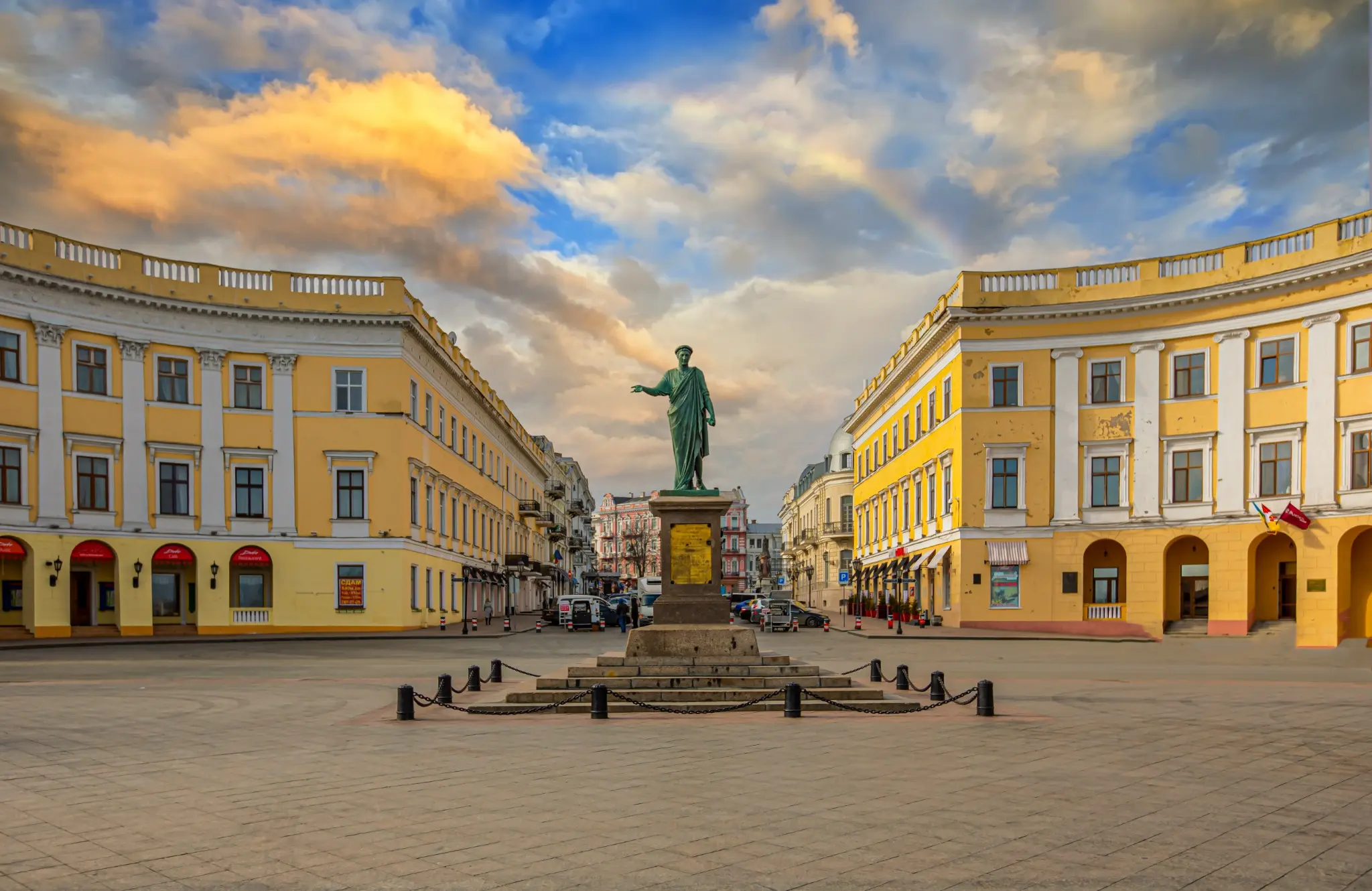
Odesa stands where the Ukrainian steppe meets the Black Sea. Long before its grand boulevards, this coast knew Greek settlements, the port of Khadzhibey, and Ottoman rule. The modern port city was laid out in 1794 and grew with astonishing speed.
Its harbor and free-port status drew merchants, sailors, builders, artists, and families from across Europe and the Black Sea. Ukrainian, Jewish, Greek, Italian, French, Armenian, Bulgarian, Moldovan, German, and other communities left their mark. The result was not a city with one voice, but a city fluent in many.
UNESCO now recognizes Odesa's historic center as a World Heritage Site: a rare urban record of a multicultural trading city whose architecture and way of life were shaped by exchange.
Five moments · one enduring character
Ancient settlements, regional trade, and the port of Khadzhibey connect this coast to a much older Black Sea story.
A new port and rational street plan establish the framework for a city designed to trade with the world.
Commerce accelerates. Languages, faiths, ingredients, and ideas arrive through the harbor and settle into daily life.
Designed by Viennese architects Fellner & Helmer, it becomes a symbol of Odesa's European cultural confidence.
UNESCO inscribes the historic center—and places it on the List of World Heritage in Danger during the war.
A European city on the Black Sea
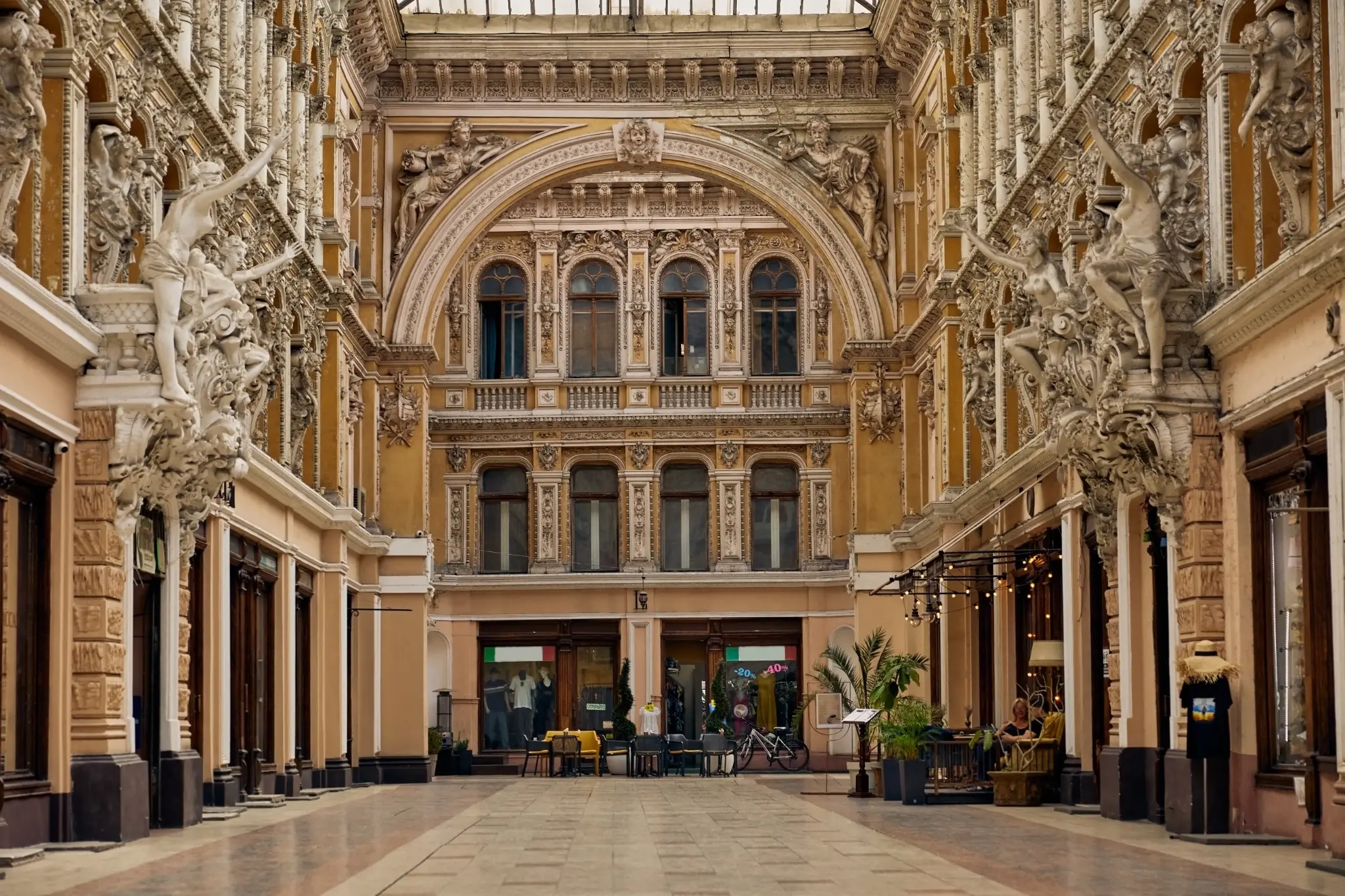
Odesa's early plan came from Dutch engineer François de Wollant. Italian architects shaped many of its most recognizable buildings; French, Greek, Austrian, and other European influences followed. Palaces, courtyards, arcades, theaters, hotels, warehouses, and trading halls created an elegant city that never forgot it was a working port.
That is why Odesa can feel Mediterranean, Central European, Ukrainian, and unmistakably itself—all in the space of one walk.
The details that make people fall in love
Odesa's catacombs form an immense maze—far longer than the distance from Midland to Miami. Much of the stone quarried from these tunnels became the warm, pale buildings of old Odesa.
The Potemkin Stairs widen dramatically toward the harbor, making them appear longer and grander from below. Built as the ceremonial gateway from sea to city, they later became one of cinema's most recognizable locations.
You may hear that Odesa's Opera House is the world's “second most beautiful.” No authoritative global ranking proves that claim—but none is needed. Its Viennese Baroque exterior, lavish Rococo hall, celebrated acoustics, and place in Odesa's UNESCO-listed ensemble make it one of Europe's great theatrical landmarks.
What began with goods sold from horse-drawn carts grew into one of Europe's great bazaars. Odesans go for fish, fruit, spices, gossip, negotiation, and the kind of humor that turns shopping into theater.
The roots of Odesa Film Studio reach back to Myron Grossman's private workshop on French Boulevard. Its museum now preserves early equipment and the camera used by Ukrainian filmmaker Oleksandr Dovzhenko.
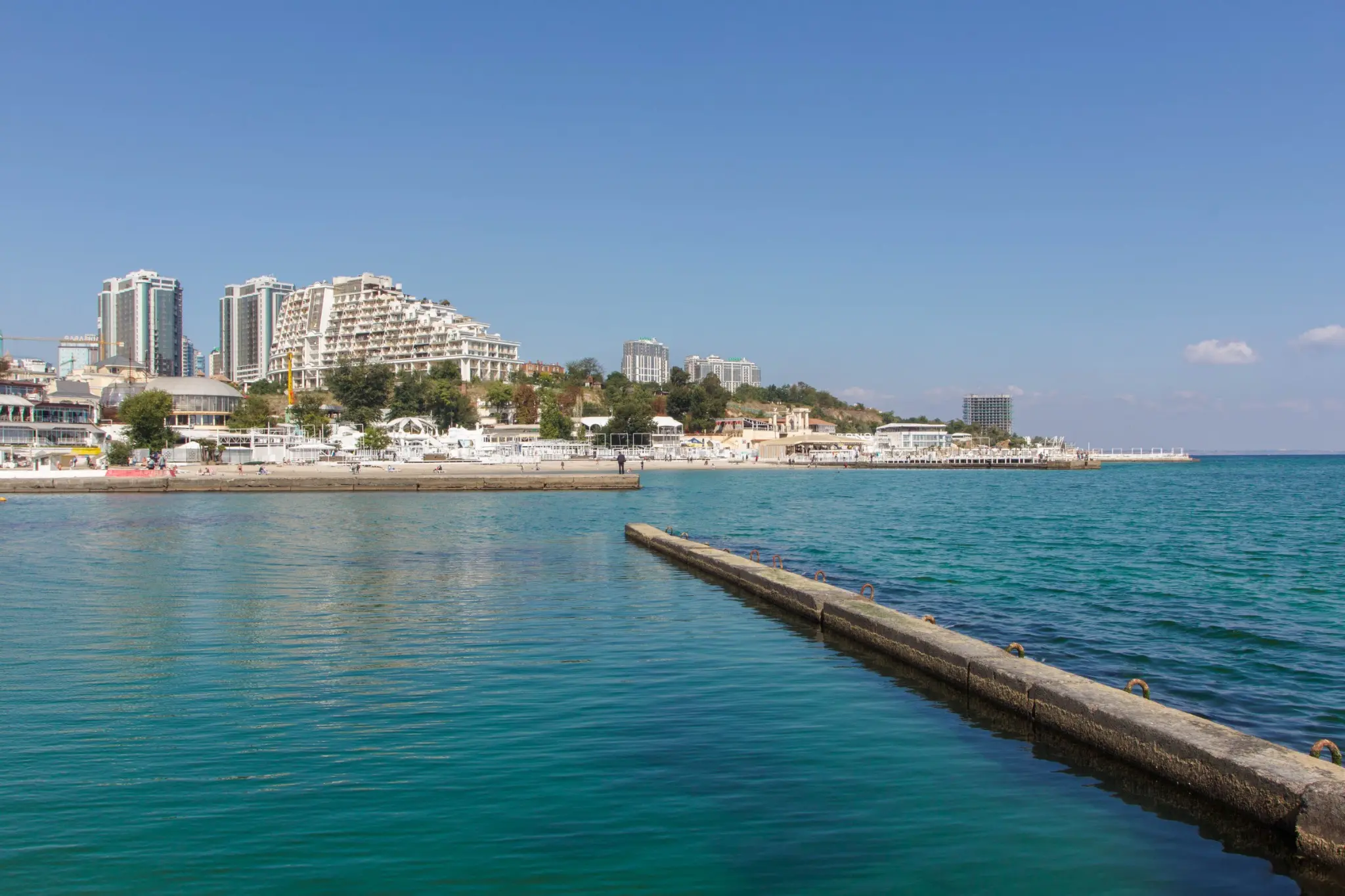
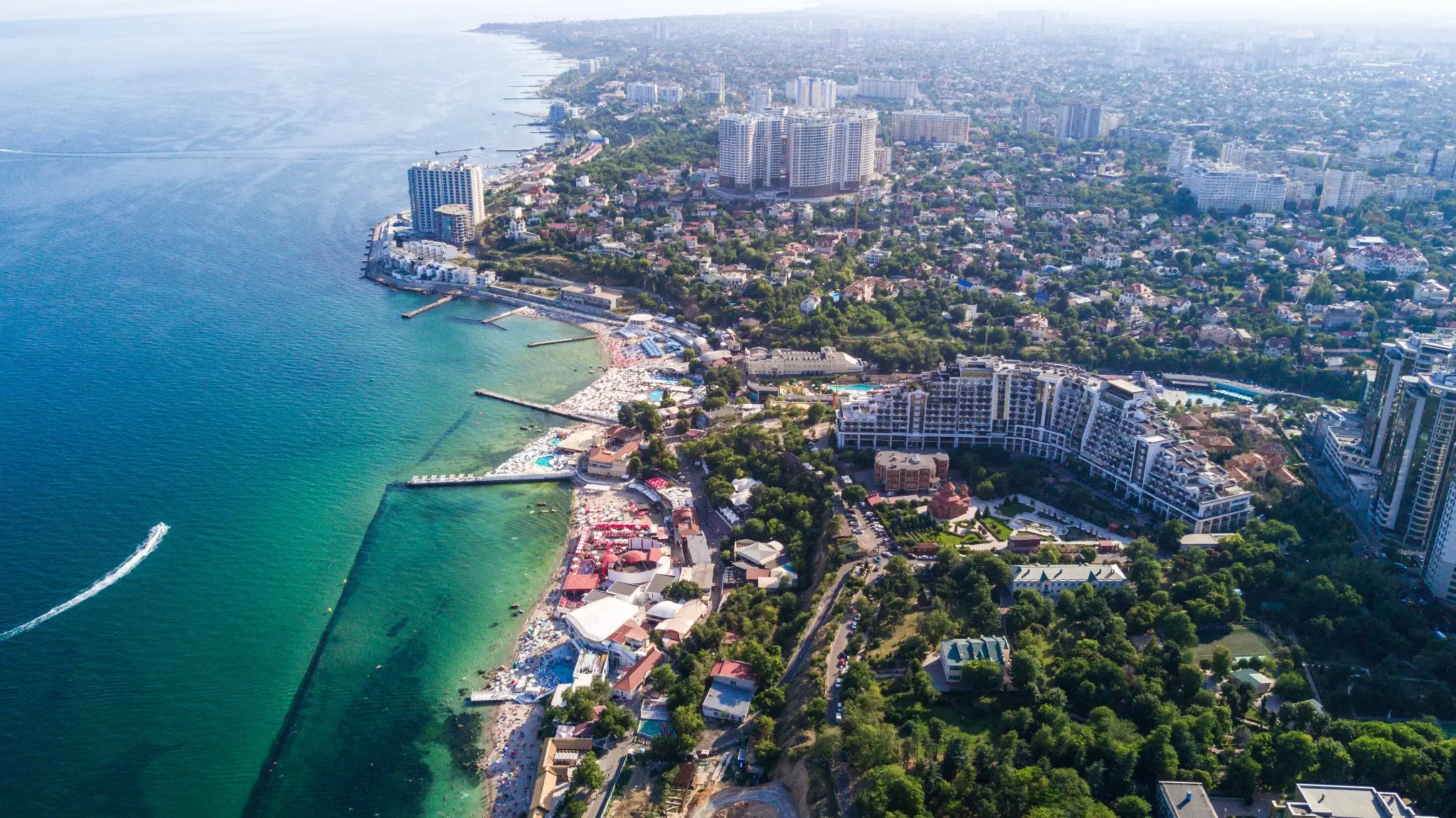
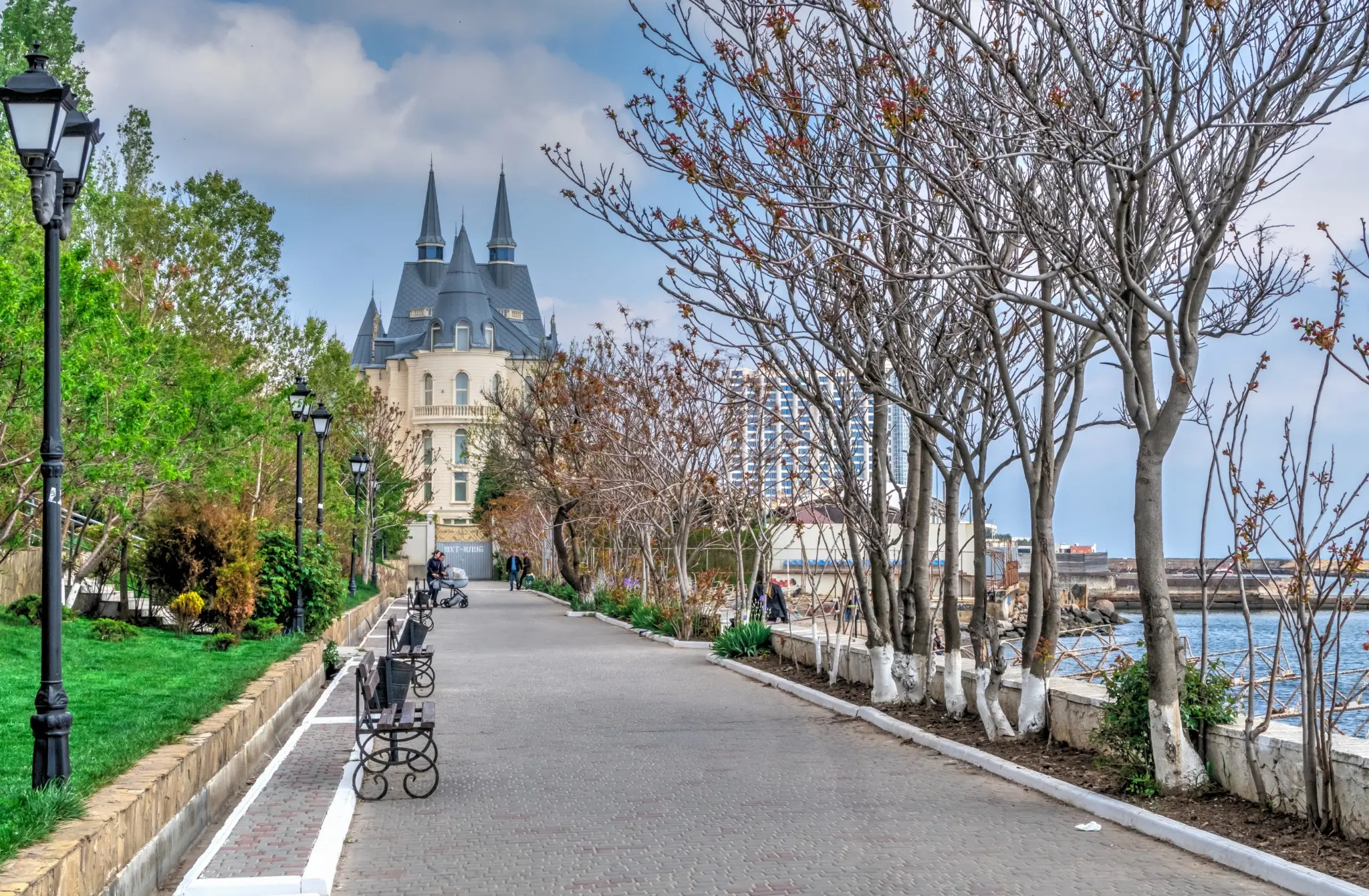
Odesa follows its Black Sea bay for more than thirty kilometers. Beaches, cliffs, parks, ports, courtyards, and grand boulevards belong to the same city—one reason a single visit never feels like enough.
The city, translated through food
Its cuisine grew the same way the city did: through proximity, migration, trade, and the instinct to make something generous from what the sea, fields, markets, and seasons provided.
Fish, mussels, tiny shrimp, and the habit of letting fresh ingredients remain recognizable.
Borscht, varenyky, breads, sour cream, dill, seasonal vegetables, and comfort built by hand.
Forschmak, stuffed dishes, eggplant, slow cooking, wit, and a profound culture of feeding people well.
Greek, Bessarabian, Balkan, Italian, French, Armenian, and other influences meeting at the same market table.
This is why our menu can move naturally from handmade varenyky and Chicken Kyiv to baked oysters, mussels, beef with sour cherry, and European desserts. The range is not a departure from Odesa. It is the most Odesan thing about it.
Explore our menu previewA family archive
Christina's grandfather, composer Nikolai Kolodochka, wrote many songs about Odesa. His music is part of the family memory behind this restaurant: proof that a city can be carried not only in recipes, but in melody.

Open the original 158-page musical collection in our read-only archive.
View the collection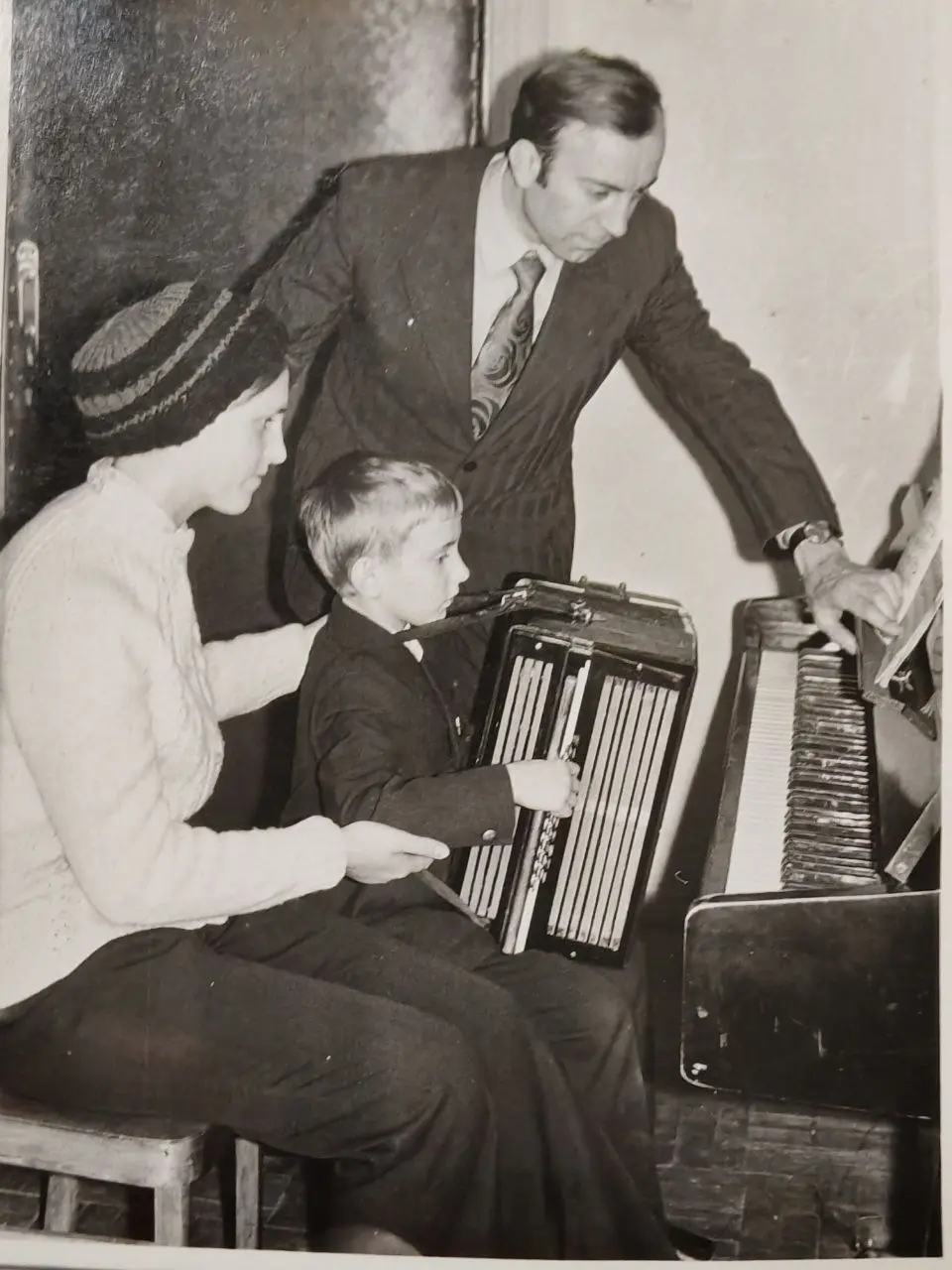
Odesa across the Atlantic
Texas history offers a surprising connection. The Texas Almanac says the railroad water stop that became Odessa, Texas, was most likely named by workers who thought the West Texas landscape resembled the steppe around Odesa, Ukraine. The spelling changed; the memory traveled.
Born in Odesa in 1904, he came to the United States, taught at George Washington University, and became a pioneering voice in modern cosmology.
Born in Odesa in 1904, he settled in New York, became an American citizen, and was celebrated as one of the great violinists of the twentieth century.
Born in Odesa, he arrived in the United States as a child, studied at Philadelphia's Curtis Institute, and performed at the White House in 1923.
A city the world came to see
Before the full-scale war, city tourism officials reported more than three million visitors annually. They came for the opera, the architecture, the beaches, the markets, the courtyards, the nightlife, and the feeling that Odesa could turn an ordinary evening into a story.
We miss that living city—not as a postcard, but as home.
Beauty with memory
Odesa's cosmopolitan history was never without pain. Its communities endured pogroms, revolution, famine, the Holocaust, occupation, Soviet repression, and now Russia's war against Ukraine. Many voices were lost; others carried the city into new countries and new languages.
To tell only the beautiful parts would make Odesa smaller than it is. Its real richness is the ability to remember, adapt, laugh, feed one another, and remain open to the world.
From Odesa to Midland
Odesa by Chef Sergey will not try to reproduce a city thousands of miles away. It will carry forward what mattered most: food made with care, beauty without coldness, a table with room for many influences, and hospitality that makes a stranger feel expected.